Different ant species present distinct structural and health risks to residential homes, requiring specific botanical or non-repellent treatments rather than broad-spectrum sprays. Rover ants and odorous house ants…
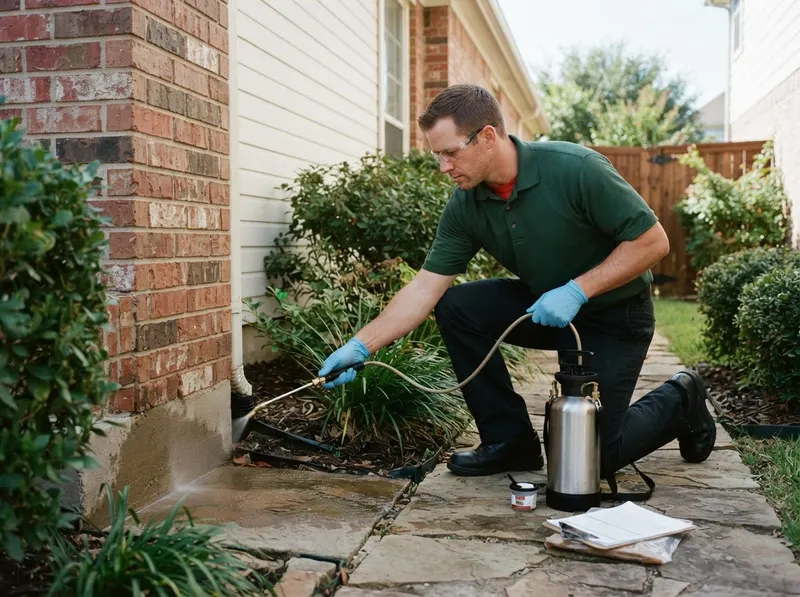
Different ant species present distinct structural and health risks to residential homes, requiring specific botanical or non-repellent treatments rather than broad-spectrum sprays. Rover ants and odorous house ants frequently colonize wall voids near wet plumbing lines in kitchens and utility rooms, whereas carpenter ants hollow out moist wood framing behind siding or around roof eaves. Spraying consumer contact insecticides often triggers a defensive mechanism called budding, where a single Pharaoh or rover ant supercolony splits into multiple separate nesting units throughout the drywall. Professional ant remediation deploys slow-acting, non-repellent transfer baits that worker ants carry directly to the queen, neutralizing the reproductive core of the colony within 7 to 14 days without contaminating domestic food preparation surfaces.
Collin County soil conditions directly dictate ant foraging behavior throughout North Texas. Heavy Houston black clay expands during wet spring periods and develops deep soil fissures during prolonged summer heat across master-planned communities like Stonebridge Ranch, Tucker Hill, and Trinity Falls. Red imported fire ants leverage these ground fissures around concrete slab foundations to construct extensive subterranean pathways, bypassing exterior surface granules and surfacing through expansion joints into living spaces. Homes adjacent to greenbelts and water features near Towne Lake Recreation Area, Gabe Nesbitt Community Park, and Mallard Lakes face recurring foraging pressure from acrobat and Argentine ants nesting within landscape mulch, mature oak canopies, and retaining walls.
Effective mitigation relies on an integrated plan executed in sequential order: 1. A visual crawl-space, attic, and perimeter moisture inspection identifies the primary entry points and species anatomy. 2. Non-staining micro-injection gel baits are applied along baseboard perimeters and under sink cabinets away from children and household pets. 3. Foundation weep holes are dusted with desiccant powders to seal exterior entry points. 4. A continuous three-foot liquid barrier treatment is applied along the home foundation to suppress outside trails. The operational trade-off involves bait placement speed versus perimeter longevity: targeted interior baiting resolves indoor activity inside two weeks but requires strictly leaving bait lines undisturbed, while exterior barrier bands shield the home for 60 to 90 days against natural outdoor recolonization.
Every job gets a firm, written price after a free on-site visit.
Tell us about your ant control job in McKinney and we'll send a clear, written quote, usually the same day.
 Old Mill Pest Control